Grow Your Revenue
Without Adding New Staff
OR Utilizing Your Time

Why Fast Customer Response Matters?
Fast customer response can make the difference between winning and losing an enquiry. Learn why response speed matters and how small businesses can improve it without adding more pressure to their team.

Why Fast Customer Response Matters for Small Business?
A potential customer contacts your business because they need help, information or a service.
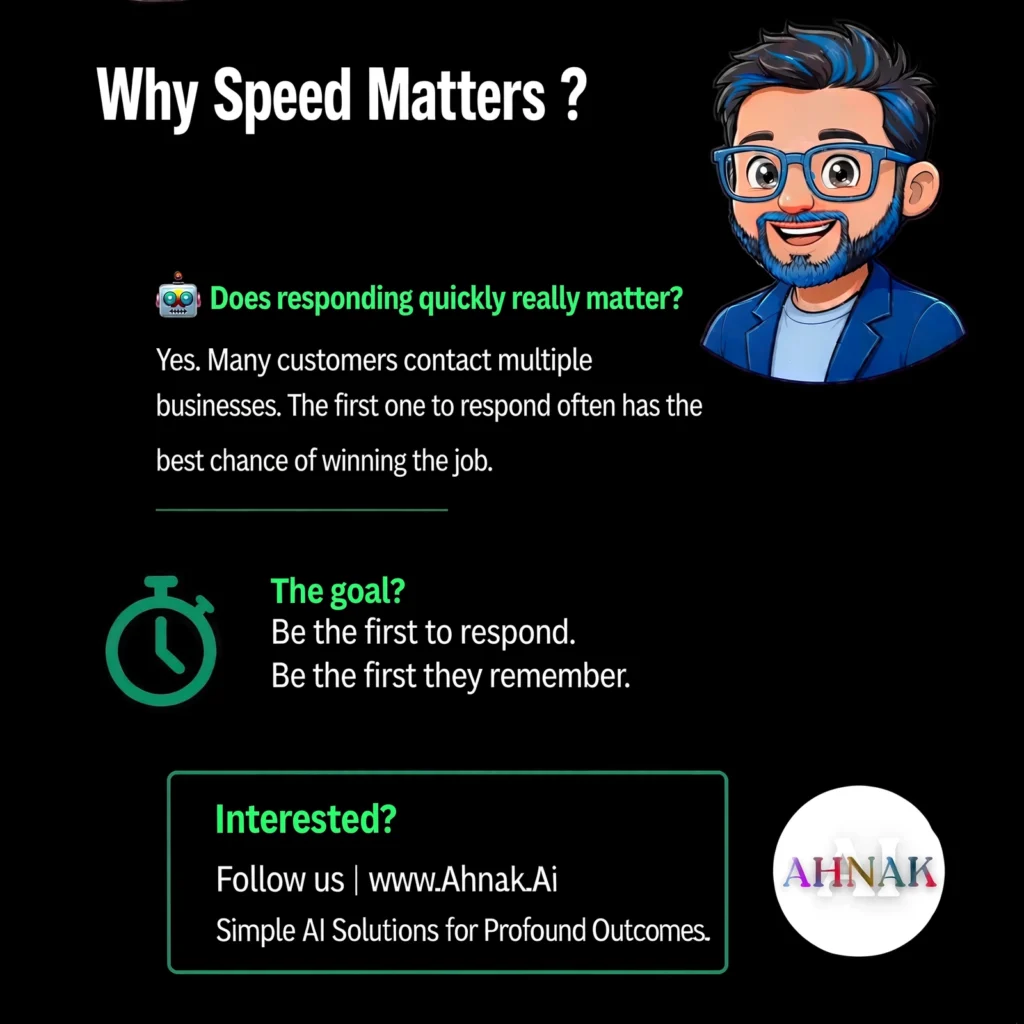
At that moment, they may also be contacting several other businesses.
This is why fast customer response matters. The business that acknowledges the enquiry quickly often has a better opportunity to begin the conversation, understand the customer’s needs and remain front of mind.
Responding quickly does not guarantee that every enquiry will become a customer. However, a slow or missing response can allow the opportunity to disappear before the conversation even begins.
For small and service-based businesses, improving response time can be one of the simplest ways to create a better customer experience.
What Does Fast Customer Response Mean?
A fast customer response does not always mean providing a complete answer immediately.
In many situations, the first response can simply confirm that the enquiry has been received.
For example:
Thanks for contacting us. We have received your enquiry and will get back to you shortly.
This small acknowledgement tells the customer that their message has reached the right place.
The business can then ask a few initial questions, gather relevant details or advise when a team member will respond personally.
The most important thing is that the customer does not feel ignored.
Why Do Customers Expect Faster Responses?
Customers have become used to receiving quick information through websites, messaging services, online booking systems and mobile applications.
When they contact a business and receive no acknowledgement, they may become uncertain about whether the business is available, organised or interested in the work.
This is particularly important for service-based businesses.
A customer looking for an electrician, plumber, builder, tutor, music teacher or consultant may not wait several hours for a response. They may continue contacting other providers until someone replies.
A faster customer enquiry response can help the business enter the decision-making process before the customer moves on.
Speed Helps Build Trust
A quick response can create an early impression of reliability.
Before the customer has experienced the actual service, they may judge the business based on how communication is handled.
A timely response can suggest that the business is:
- Available
- Organised
- Professional
- Attentive
- Easy to deal with
This does not mean the business must promise immediate service or answer every question instantly.
It means the customer receives clear communication and understands what will happen next.
That clarity helps build trust.
Why Small Businesses Often Struggle to Respond Quickly
Many small businesses do not have a dedicated receptionist or customer service team.
The owner may be completing work, travelling between appointments, speaking with an existing customer or managing several responsibilities at once.
As a result, calls are missed, messages remain unread and follow-up is delayed.
This is not usually because the business does not care about the enquiry. It is because there is limited time and attention available.
However, the customer cannot see what is happening behind the scenes. They only know that they have not received a response.
Improving small business response time therefore requires a process that works even when the owner or team is busy.
The First Response Does Not Need to Be Complicated
One common mistake is assuming that every response must be complete, personalised and detailed.
In reality, the first response often only needs to achieve three things:
- Confirm that the enquiry has been received
- Show that the business is ready to help
- Guide the customer toward the next step
The next step might involve answering a question, requesting photos, collecting job details, arranging a call or offering an appointment.
This creates momentum in the conversation.
How AI Can Support Faster Responses
AI customer response systems can help small businesses acknowledge enquiries when a person is not immediately available.
For example, AI can help:
- Respond after a missed call
- Acknowledge website enquiries
- Answer common questions
- Collect basic customer information
- Ask what service is required
- Offer available appointment times
- Direct urgent enquiries appropriately
- Notify the business when human input is needed
The purpose is not to remove people from the customer relationship.
It is to ensure that the customer receives a timely first response while the business owner or team continues with their work.
Fast Response Should Still Feel Helpful
Speed alone is not enough.
A response that is immediate but confusing, generic or irrelevant may not improve the customer experience.
The message should be clear, polite and connected to the customer’s enquiry.
It should also make it easy for the customer to continue the conversation.
For example, instead of sending only:
We received your message.
A more useful response may be:
Thanks for contacting us. Could you briefly tell us what service you need and your preferred location?
This keeps the conversation moving and helps the business gather useful information.
Response Speed and Follow-Up Work Together
A fast first reply is valuable, but it should be supported by consistent follow-up.
Some customers will not respond immediately. Others may need time to consider their options.
A business may acknowledge the enquiry quickly but still lose the opportunity if nobody follows up afterwards.
Good customer engagement for small business therefore includes both:
- A timely first response
- A clear and consistent follow-up process
These two elements help prevent enquiries from being forgotten.
How Can a Small Business Improve Response Time?
Start by reviewing where customer enquiries currently arrive.
They may come through:
- Phone calls
- SMS
- Website forms
- Web chat
- Google Business Profile
Then ask:
- Which channels are checked regularly?
- Where are enquiries most often missed?
- How long does the first response usually take?
- What basic information could be collected automatically?
- When should a person take over?
The aim is not to automate every conversation. It is to remove unnecessary delays.
The Goal Is to Be Ready When the Customer Is Ready
Customers often make contact when their need is active.
That may be when something has broken, when they are comparing providers or when they are ready to book.
A strong fast customer response process helps the business meet the customer at that moment.
The goal is simple:
Be available when the customer is ready to talk.
A timely response helps the business begin the conversation, build trust and create a stronger opportunity to convert the enquiry into a customer.